Qevorinexoner
Frame Set
Frame Set
Couldn't load pickup availability
- 📥 Digital file available after purchase
- 🗂️ Long-term availability
- 🔐 Secure checkout
- 📅 Content updated in 2026
Self-paced learning overview
Problem Statement
Once learners have selected a topic and outlined an audience, the next challenge is turning those ideas into a clear content structure. Many early affiliate marketing projects become difficult to manage because individual posts, guides, and recommendations are created without a shared framework.
Inconsistent formatting can also make future planning more time-consuming. When every piece of content begins from a blank page, it becomes harder to maintain a steady approach and review what has already been covered.
Solution
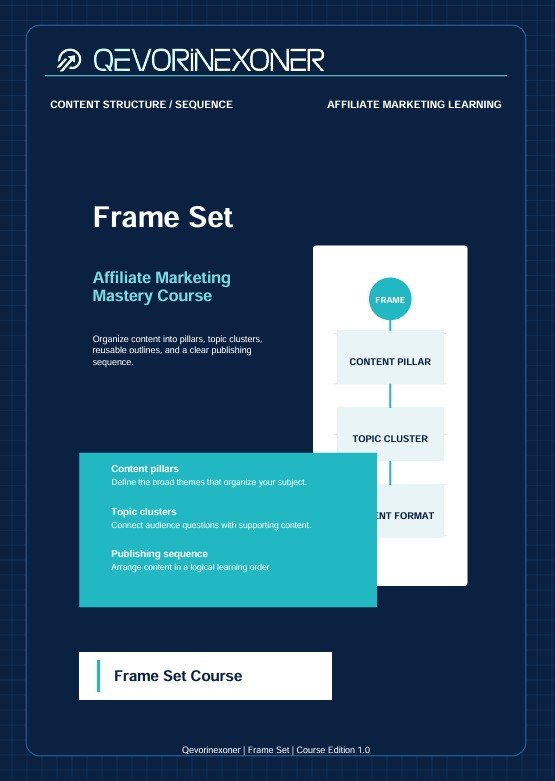
The Qevorinexoner Frame Set introduces a practical framework for organizing content into connected groups. Learners explore how to arrange broad themes, supporting topics, audience questions, and recommendation opportunities within a consistent structure.
The aim is to help learners develop a clear content foundation that can support future modules, campaigns, and analytical work.
What’s Inside
The Frame Set includes structured modules and planning resources focused on content architecture and organization.
The materials include:
- A content pillar planning worksheet
- Topic cluster mapping exercises
- Audience-question sorting prompts
- Reusable content outline formats
- Educational and recommendation balance guidelines
- Internal linking planning pages
- A publishing sequence worksheet
- Content review and revision checklists
- Practical examples of connected topic structures
Learners will build a simple content map showing how primary subjects connect with supporting materials. They will also examine how different content formats can serve different audience needs without relying on exaggerated wording or repeated promotional messages.
Who Is This For?
The Frame Set is intended for learners who have already chosen a topic direction and developed a basic audience profile.
It is suitable for content planners, independent creators, small project owners, writers, and learners who want to organize a growing collection of educational and recommendation-based materials.
What You’ll Learn
- Organize broad themes into focused content pillars
- Group related ideas into practical topic clusters
- Match audience questions with suitable materials
- Create reusable outlines for different content formats
- Arrange topics in a logical learning sequence
- Connect educational material with relevant recommendations
- Plan internal links between related pages
- Identify repetition and missing subject areas
- Build a manageable publishing framework
- Prepare structured materials for the Flux Bundle tier
30-Day Refund Information
The Frame Set includes a 30-day money-back policy. Refund requests may be submitted within 30 days of purchase and are reviewed according to the terms displayed on the Qevorinexoner website.
This policy allows learners to examine the course structure and determine whether the materials align with their learning needs.
Certification
The course include a certificate of completion, giving learners a clear way to confirm their progress and showcase their achievement.
Share
How are the course tiers organized?
How are the course tiers organized?
The tiers follow a gradual learning path. Each course introduces new concepts, activities, and planning methods while building on the knowledge covered in earlier materials. Learners can begin with the Free Guide and continue through the higher tiers at their preferred pace.
Do I need previous affiliate marketing experience?
Do I need previous affiliate marketing experience?
No previous experience is required for the introductory tiers. The materials explain key terms, common structures, and basic planning methods before moving into more detailed topics. Later tiers are intended for learners who want to examine broader workflows and analytical methods.
How are the materials delivered?
How are the materials delivered?
Each tier contains structured digital learning materials divided into clear sections or modules. Depending on the tier, the resources may include explanations, examples, worksheets, planning prompts, checklists, and practical exercises.